

When you say the word ‘play,’ what comes to mind?
Probably toys, messy rooms, and a lot of giggles. But here’s the thing for a child, play is so much more than just blowing off steam, it’s their full-time job.
Remember how a mother teaches her baby to say ‘Ma-ma’? She doesn’t sit the baby down with a flashcard or give a lecture. She smiles, she plays peek-a-boo, she tickles them, and gently whispers, ‘Say Ma-ma… Mamma.’ The baby learns the word not because they are ‘studying,’ but because they are having fun and connecting.
Play-based learning works the same way. It takes that natural, joyful way of learning and brings it into the classroom. Instead of forcing dry facts, we let children explore stories, games, and hands-on activities. Just like that ‘Ma-ma’ moment, the learning happens effortlessly because the child is engaged, happy, and safe.
In this blog, we’ll dive deeper into exactly what play-based learning is and explore how it helps in a child’s development, building everything from social skills to brain power in the most joyful way possible.
What is play-based learning?
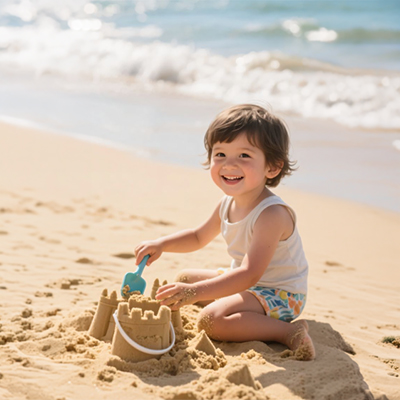
Play-Based Learning is a teaching approach where the environment itself becomes the teacher. Instead of sitting still and listening to abstract explanations, children learn by actively engaging with concepts in the real world. It transforms a simple play area into a laboratory of curiosity.
When you watch children building sandcastles or inventing games in outdoor play-based learning, you might think they are just taking a break from “real work.” But they aren’t taking a break from learning; they are right in the middle of it.
Think of it as learning in disguise. In a traditional setting, a child might memorize that “gravity makes things fall” because it’s written in a book. In a play-based setting, that same child learns physics by sliding down a slide or experimenting with how high they can swing. They aren’t just memorizing a fact; they are feeling how the world works. This mix of free exploration and guided discovery ensures that lessons aren’t just heard, they are truly lived and understood.
The Importance of Play in Child Development

For a growing child, play is just as essential as nutritious food. And not simply because it gives them physical strength, though running and jumping certainly help, but because it also gives your child the mental fuel they need to grow.
Think of Play-Based Learning as the essential “superfood” for their developing brain. Just as a balanced diet builds strong bones, this approach builds strong neural connections. It provides the social ingredients to make friends, the emotional nourishment to handle feelings, and the creative energy to solve problems. Without this vital ingredient, a child’s development is simply incomplete.
According to the encyclopedia, child-directed play is associated with more effective problem-solving than formal, teacher-directed settings. Peer play also helps develop social and emotional skills, such as following rules, resolving conflicts, and supporting others’ well-being. Opportunities to negotiate rules during play strengthen self-regulation, while free play environments where educators take an indirect, supportive role are linked to broad developmental learning benefits.
Ways Play-Based Learning Nurtures a Child’s Early Growth
A Natural and Comfortable Learning Environment
Through play-based learning, children explore concepts in a stress-free space where curiosity leads the way. This comfort builds confidence and helps them absorb new ideas more effectively.
Stronger Cognitive Growth and Thinking Skills
Games, puzzles, and hands-on activities sharpen memory, attention, reasoning, and decision-making, laying a powerful intellectual foundation from the very beginning.
Healthy Social Skills and Emotional Intelligence
Group play teaches sharing, empathy, patience, and teamwork. Children learn to understand emotions their own and others’ which is essential for lifelong relationships.
Rich Language and Communication Development
Conversations during storytelling, pretend play, and collaborative activities naturally expand vocabulary skills, listening ability, and clear self-expression.
Improved Fine and Gross Motor Skills
Activities like drawing, building, running, and balancing strengthen coordination, control, and physical confidence, key elements of overall development.
Enhanced Creativity and Imagination
Play-based learning encourages children to think freely, create stories, design solutions, and see possibilities beyond limits, skills that drive innovation later in life.
A Lifelong Love for Learning
When learning feels joyful rather than forced, children become naturally curious and motivated, turning education into a positive, self-driven journey.
Personalized and Child-Centered Growth
Every child learns at a different pace. Play allows individual interests and strengths to guide progress, ensuring deeper understanding and confidence.
Resilience and Problem-Solving Ability
Trial, error, and discovery during play teach children how to handle challenges, adapt to change, and keep trying real-world skills that matter far beyond the classroom.
Stronger Parent–Child Connection in Learning
Play-based learning invites parents to participate through simple home activities, creating meaningful bonding moments while supporting development.
Role of Education in Play Based Learning

A thoughtful educational approach ensures that play-based learning is not random play, but meaningful exploration that supports every area of early childhood growth. When guided with purpose, play becomes one of the most powerful ways to understand the importance of play in early childhood.
Creating a Purposeful Learning Environment
Well-designed spaces filled with storybooks, art materials, sensory trays, and opportunities for outdoor play-based learning invite curiosity and independence. Even simple experiences like a child tracing letters or drawing shapes in soft sand turn the environment into a living classroom where learning feels natural and joyful.
Gentle Scaffolding and Meaningful Guidance
Teachers and parents support children by asking thoughtful questions, demonstrating ideas, and encouraging exploration. Whether a child is writing words in sand or building a tower with blocks, this gentle guidance strengthens confidence while keeping the freedom that makes play-based learning powerful.
Balancing Structure with Freedom
A healthy mix of guided activities and open exploration helps children feel secure while still experimenting, imagining, and discovering solutions on their own, an essential part of meaningful early learning.
Fostering Holistic Development
Play supports thinking skills, emotions, movement, creativity, and relationships simultaneously. Activities like storytelling and pretend play clearly show the deeper importance of play in early childhood beyond academics alone.
Observing, Documenting, and Assessing Growth
Careful observation during play helps educators understand progress in language development through storytelling, social interaction, and early reasoning without placing pressure on the child.
Benefits of a Play-Based Educational Approach
Higher Engagement and Natural Motivation
When learning feels joyful and meaningful, children naturally become more engaged. Every day, hands-on experiences and outdoor exploration nurture their curiosity and make learning come alive.
Early Academic Readiness
Counting toys in pretend play, listening to stories, or trying small DIY science experiments for preschoolers quietly build strong foundations for reading, writing, and numeracy.
Strong Social and Emotional Growth
Collaboration, teaching empathy, patience, self-esteem & confidence develop naturally when children learn together through play-based learning experiences.
Parental Role In Play-Based Learning Environment

A child’s education begins long before they step into a classroom. The home is the foundation of all future learning, where children master the essentials of speaking, moving, emotional expression, and understanding the world simply by observing and interacting with their parents. Consequently, the home is the most powerful environment for play-based learning.
Seemingly simple moments hold profound power. Whether reading a bedtime story, exploring the outdoors, or engaging in imaginative make-believe, these activities quietly sculpt a child’s language skills, confidence, and creativity. When parents meet these moments with patience and gentle guidance rather than pressure, children naturally begin to associate learning with joy and curiosity.
By cultivating a warm and playful atmosphere, parents do more than just prepare a child for school. They build resilience, foster self-belief, and deepen the parent-child bond. This nurturing involvement plants the seeds for a lifelong love of learning that extends far beyond the early years.
How Cyboard Brings Play-Based Learning to Online Schooling

At Cyboard School, we believe that “online” shouldn’t mean “passive.” We have reimagined the virtual learning environment by blending digital innovation with physical activity. Our curriculum transforms the home into a vibrant learning lab through four key pillars of engagement:
1. Learning by Doing
We bridge the gap between the screen and the physical world, ensuring students use their hands as much as their eyes.
- DIY Experiments: Science comes alive on the study table. Students perform guided experiments using everyday household items, turning abstract concepts into a tangible reality.
- Sensory Play: Especially for younger years, we integrate textures and materials to stimulate cognitive growth, moving beyond visual learning to tactile discovery.
- Hands-on Projects: From building models to crafting artifacts, students engage in project-based tasks that develop fine motor skills and practical problem-solving abilities.
2. The Interactive Classroom
Our AI-powered Learning Management System (LMS) is designed to be an engaging platform rather than a static repository.
- Gamified Assessment: We replace stressful testing with real-time Quizzes and Polls. These game-show-style interactions keep energy levels high and provide instant feedback.
- Dynamic Question Banks: Our comprehensive Subject Question Banks on the LMS allow students to practice at their own pace, turning revision into a challenge to be conquered rather than a chore to be endured.
3. Creative & Expressive Development
We cultivate emotional intelligence and confidence by giving students the stage.
- Art and Drama: Through role-play, puppetry, and visual arts, students explore complex emotions and historical narratives, building empathy and public speaking skills.
- Creative Expression: We provide a safe space for students to voice their ideas uniquely, whether through storytelling, digital creation, or performance, fostering a strong sense of self.
- Theme-Based Activities: Learning is interconnected. A single theme (like “The Ocean” or “Space”) runs across subjects, weaving together math, literature, and science into a cohesive, immersive adventure.
Ready to Experience the Future of Schooling? [Book a Free Demo Class Today] Give your child the advantage of a curriculum that balances academic rigor with the joy of play.
Frequently Asked Questions
What is play-based learning?
Why is play essential for early childhood development?
Does play-based learning prepare children for academic success?
What is the role of parents in this learning environment?
How does Cyboard make assessments fun?
How is this different from traditional teaching?
Explore More on Cyboard School