
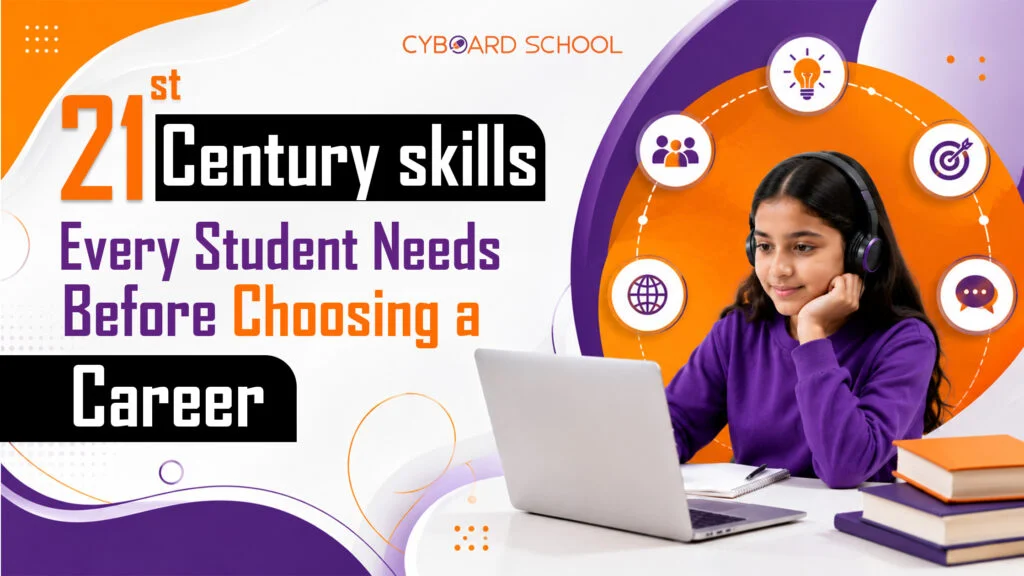
Choosing a career is no longer as simple as selecting a profession based on academic grades or family traditions. The world of work is evolving faster than ever, driven by technological advancements, artificial intelligence, automation, and changing industry demands. Many of today’s students will eventually work in roles that either look very different from today’s jobs or don’t yet exist.
In this rapidly changing environment, success depends on much more than subject knowledge. Employers and universities increasingly value students who can think critically, communicate effectively, adapt to change, and solve real-world problems. These abilities, commonly known as 21st-century skills, help students become confident learners and prepare them for meaningful careers.
Developing these skills should begin long before students make career decisions. Schools, parents, and educators all play an important role in helping children build a strong foundation that supports lifelong learning and professional success.
Why 21st-Century Skills Matter More Than Ever

The workplace has undergone a significant transformation over the past decade. Businesses now seek individuals who can collaborate across teams, embrace technology, and continuously learn new skills. While academic achievement remains important, employers increasingly prioritize practical abilities that enable individuals to adapt to changing environments.
Whether a student dreams of becoming a doctor, engineer, entrepreneur, designer, teacher, pilot, or hospitality professional, the ability to learn, communicate, and solve problems will always remain valuable.
Building these skills early allows students to:
- Make informed career decisions.
- Adapt to emerging industries.
- Improve academic performance.
- Build confidence in unfamiliar situations.
- Develop leadership qualities.
- Prepare for higher education and professional training.
1. Critical Thinking and Problem-Solving
One of the most valuable skills students can develop is the ability to analyze information and make thoughtful decisions. Instead of memorizing facts, learners should understand how to evaluate situations, identify challenges, and develop practical solutions.
For example, rather than simply learning scientific concepts, students should be encouraged to apply them to real-life situations through projects, experiments, and discussions.
Critical thinking helps students:
- Evaluate information objectively.
- Avoid misinformation.
- Make better career decisions.
- Approach challenges with confidence.
As technology continues to automate repetitive tasks, human problem-solving abilities will become even more valuable.
2. Communication Skills
Strong communication forms the foundation of success in every profession. Whether speaking with colleagues, presenting ideas, writing emails, or interacting with customers, effective communication builds trust and improves collaboration.
Students should develop both verbal and written communication from an early age. Activities such as debates, presentations, storytelling, group discussions, and creative writing can significantly improve these abilities.
Good communication enables students to:
- Express ideas clearly.
- Work effectively in teams.
- Build professional relationships.
- Perform confidently during interviews and presentations.
3. Digital Literacy
Technology is now part of nearly every career. From healthcare and education to aviation, hospitality, logistics, and business management, digital tools have become essential in everyday work.
Digital literacy goes beyond using a computer. Students should understand how to search for reliable information, collaborate using online platforms, protect personal data, and use digital technologies responsibly.
Learning these skills early prepares students for higher education and modern workplaces where technology plays a central role.
4. Adaptability and Lifelong Learning
Career paths are no longer fixed. Professionals frequently upgrade their skills, change industries, and embrace new technologies throughout their careers.
Students who develop adaptability are better prepared to face change with confidence rather than fear. They become curious learners who view challenges as opportunities to grow.
Encouraging students to explore new subjects, participate in extracurricular activities, and learn independently helps foster a mindset of continuous improvement—an essential quality for success in the 21st century.
5. Collaboration and Teamwork
Success in today’s world is rarely achieved alone. Whether students pursue careers in engineering, healthcare, business, hospitality, aviation, or technology, they will almost certainly work with people from different backgrounds, cultures, and areas of expertise.
Teamwork teaches students how to share responsibilities, respect diverse opinions, resolve conflicts, and contribute toward a common goal. These experiences help build confidence and improve interpersonal relationships.
Schools can encourage collaboration through group projects, classroom discussions, peer learning activities, and community initiatives. Parents can reinforce these skills by involving children in family decision-making and encouraging participation in sports, clubs, or volunteer work.
Students who learn to work well with others often become more adaptable and better prepared for both higher education and the workplace.
6. Creativity and Innovation
Creativity isn’t limited to art, music, or design. It’s the ability to think differently, generate fresh ideas, and approach challenges from new perspectives.
As industries evolve, employers increasingly value people who can innovate rather than simply follow established methods. Whether developing a new business idea, improving a customer experience, or finding an efficient solution to a workplace challenge, creativity plays an important role.
Students can strengthen creative thinking by:
- Exploring hobbies and personal interests.
- Participating in project-based learning.
- Asking questions without fear of making mistakes.
- Experimenting with different approaches to solving problems.
A creative mindset encourages curiosity, resilience, and confidence—qualities that remain valuable throughout life.
7. Emotional Intelligence
Academic excellence alone doesn’t guarantee success. Understanding emotions—both our own and those of others—is equally important.
Emotional intelligence includes self-awareness, empathy, self-control, and the ability to build positive relationships. These qualities help students communicate effectively, handle stress, and work well in diverse environments.
Students with strong emotional intelligence are more likely to:
- Manage pressure during exams.
- Handle constructive feedback positively.
- Build healthy friendships.
- Resolve disagreements respectfully.
- Develop strong leadership qualities.
Parents and teachers can nurture emotional intelligence by encouraging open conversations, active listening, and empathy in everyday situations.
8. Leadership and Decision-Making
Leadership is not about holding a title; it’s about taking responsibility, making thoughtful decisions, and inspiring others through positive actions.
Students develop leadership through opportunities to organise events, lead group activities, mentor peers, or participate in student councils and community programs.
Equally important is decision-making. From selecting subjects in school to choosing future career paths, students face many choices that shape their future. Learning how to evaluate options, gather information, and consider long-term consequences helps them make informed decisions with confidence.
9. Time Management and Self-Discipline
Managing time effectively is a skill that benefits students throughout their academic and professional lives.
Students often balance schoolwork, extracurricular activities, family responsibilities, and personal interests. Learning to prioritise tasks and avoid procrastination helps reduce stress while improving productivity.
Simple habits such as maintaining a study schedule, setting realistic goals, and breaking large tasks into smaller steps can significantly improve focus and efficiency.
Self-discipline also teaches students to stay committed to their goals even when motivation fluctuates—a quality that employers and educational institutions highly value.
10. Career Awareness and Continuous Skill Development
Many students choose careers based on familiarity rather than understanding. Early career awareness helps them explore different industries, discover their interests, and make informed educational choices.
Career exploration can include:
- Speaking with professionals.
- Attending career guidance sessions.
- Participating in internships or workshops.
- Exploring vocational and professional education pathways.
For students interested in practical, industry-focused careers, institutions offering specialised training can provide valuable opportunities to build job-ready skills. Exploring recognised vocational education providers, such as Patron International, can help students understand career pathways in fields like aviation, logistics, hospitality, and other skill-based industries. Exposure to these options enables learners to connect classroom learning with real-world opportunities and make better-informed decisions about their future.
How Parents and Schools Can Prepare Students for the Future

Helping students develop 21st-century skills requires consistent support from both parents and educators.
Some practical ways include:
- Encouraging curiosity instead of focusing only on grades.
- Promoting reading, discussions, and independent thinking.
- Allowing children to solve age-appropriate problems on their own.
- Supporting participation in sports, arts, and extracurricular activities.
- Teaching responsible use of technology.
- Introducing career exploration before higher secondary education.
- Celebrating effort, resilience, and continuous improvement alongside academic achievements.
When schools and families work together, students gain both the confidence and practical abilities needed to succeed in an ever-changing world.
Conclusion
The future belongs to students who are prepared not only with knowledge but also with the skills to adapt, collaborate, and grow. While academic excellence remains an important foundation, it is the combination of critical thinking, communication, digital literacy, emotional intelligence, creativity, and resilience that truly prepares young people for long-term success.
Career choices should never be based solely on trends or external expectations. Instead, students should be encouraged to explore their interests, understand their strengths, and develop the practical skills that modern industries demand. Parents, teachers, and educational institutions all share the responsibility of creating learning environments where these abilities can flourish.
As education continues to evolve, students who embrace lifelong learning and continuously upgrade their skills will be better equipped to navigate future opportunities with confidence. Whether they choose higher education, vocational training, entrepreneurship, or professional careers, developing 21st-century skills today lays the foundation for a successful tomorrow.
Key Takeaways
- Academic knowledge and practical skills go hand in hand.
- Career preparation should begin during school, not after graduation.
- Communication, critical thinking, digital literacy, creativity, and emotional intelligence are essential for every career.
- Parents and schools play an equally important role in nurturing these abilities.
- Lifelong learning and adaptability are key to thriving in a rapidly changing world.
Frequently Asked Questions (FAQs)
1. What are 21st-century skills?
2. Why are 21st-century skills important for students?
3. When should students start developing these skills?
4. Can schools teach these skills effectively?
5. How can parents help their children build these skills?
6. Do these skills matter more than academic grades?
Explore More on Cyboard School