
Cyboard School

Latest

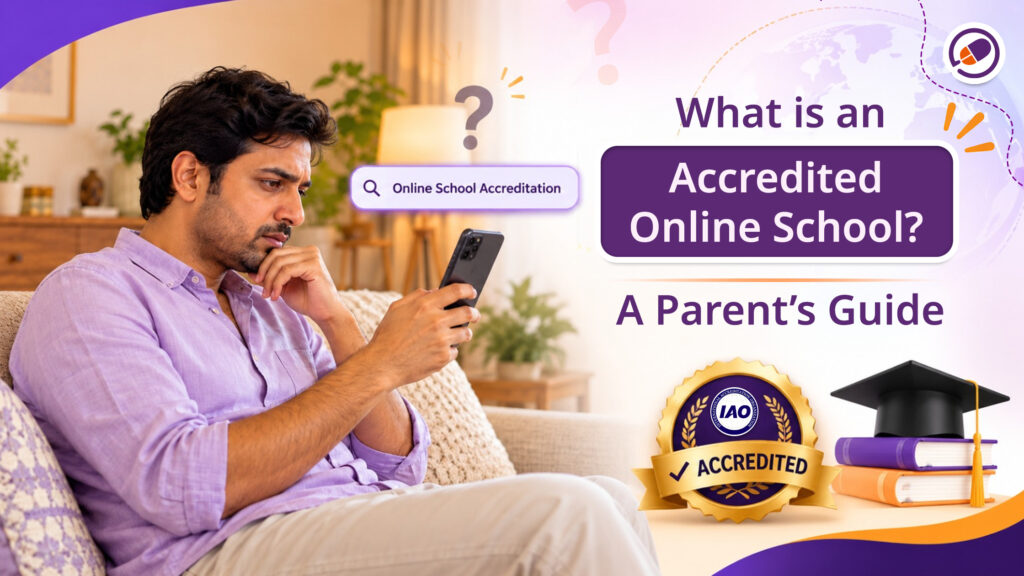
What is an Accredited Online School? A Parent’s Guide

What is an Accredited Online School? A Parent’s Guide 

Choosing an online school for your child? Then two questions must be on your mind. Firstly, is this school even genuine, and will my child’s certificate be accepted later? Great questions, and the answer starts with understanding what ‘accredited’ really means. In short, an accredited online school is one whose quality has been reviewed by

What is an Accredited Online School? A Parent’s Guide  Read More »
What is APAAR ID? Full Form, Benefits, and ABC ID Difference

What Is APAAR ID? Full Form, Benefits & Difference Between APAAR ID and ABC ID

Aadhaar has 12 digits. So does APAAR ID. That is where the confusion starts, and many parents assume the new school form is just some other version of Aadhaar. In reality, it is not.  APAAR ID is a separate, lifelong academic ID that keeps a student’s marksheets, certificates, and achievements in one place. Imagine a

What Is APAAR ID? Full Form, Benefits & Difference Between APAAR ID and ABC ID Read More »

What Is the NIOS Board? Benefits, Open Schooling, and Who Should Choose It?

What Is the NIOS Board? Benefits, Open Schooling, and Who Should Choose It?

“My classmate switched to the NIOS board from a regular school. Can I also …” That’s what your child tells you casually when he gets tempted by the flexible schedule of open schooling. But your reaction is totally the opposite. It isn’t curiosity. It’s a suspicion. Maybe you haven’t heard about the NIOS board yet,

What Is the NIOS Board? Benefits, Open Schooling, and Who Should Choose It? Read More »

Teaching Children Digital Responsibility in an Increasingly Connected World

Teaching Children Digital Responsibility in an Increasingly Connected World

Children are growing up in a world where the internet is no longer something they simply “go online” to use. Smartphones, tablets, gaming consoles, social media, streaming platforms, AI tools, messaging apps, and connected devices are now part of everyday life. Technology gives children incredible opportunities to learn, communicate, create, and explore. At the same

Teaching Children Digital Responsibility in an Increasingly Connected World Read More »

What is a Flipped Classroom? (And Is It the Right Choice for Your Child)

What is a Flipped Classroom? (And Is It the Right Choice for Your Child)

Does your child get bored sitting in a classroom throughout the day?  Are “Good Morning” and “Thank you” the only two things your child says out loud during a 45-minute lecture? Your child isn’t alone. The reality is that for most of the students, the rest of the lecture passes in complete silence, with no

What is a Flipped Classroom? (And Is It the Right Choice for Your Child) Read More »

Life skills education banner showing a confident student ready to grow beyond academics

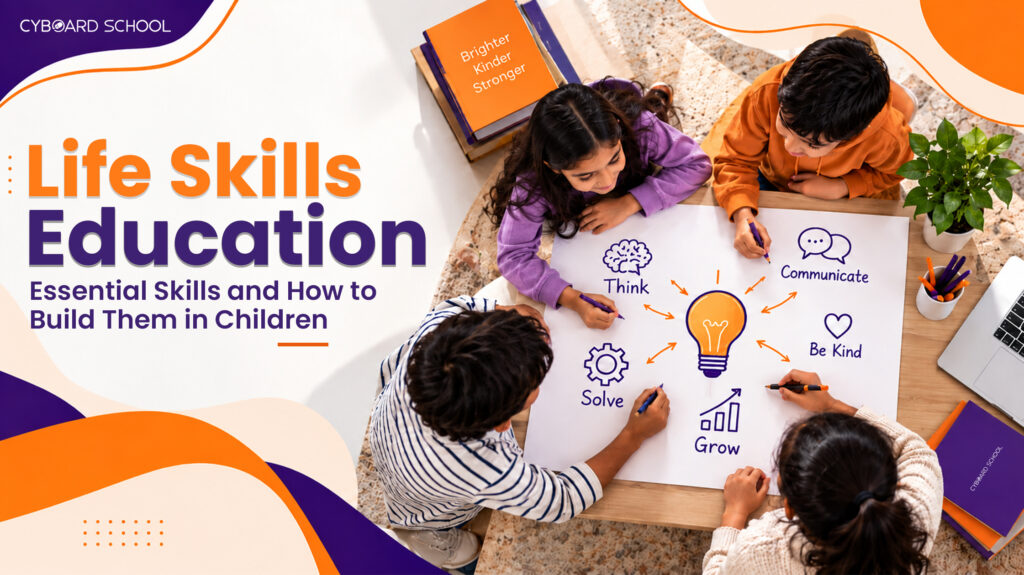
Life Skills Education: Essential Skills and How to Build Them in Children

Two students sat in the same classroom. Same school, same teachers, same grades on most report cards. But they didn’t end up doing equally well in their careers. Fast forward to ten years later, one of them was leading a team, making high-level ownership decisions, adapting to new roles, and comfortable speaking up and negotiating

Life Skills Education: Essential Skills and How to Build Them in Children Read More »

How to Stay Motivated While Learning Online: Practical Study Tips

  Motivation dips lowest exactly when it’s needed the most. The night before an exam is somehow always the night when everyone else seems to be having more fun than you. If you’ve ever searched for ‘study motivation tips’ the night before an exam, hoping for a quick fix, here’s the truth: motivation was never

How to Stay Motivated While Learning Online: Practical Study Tips Read More »

Why Some Students Learn Faster Than Others? The Science Of Quick Learning

Why Some Students Learn Faster Than Others? The Science Of Quick Learning  

​Picture this: You’re sitting at your home, relaxed, watching your child struggle through a single math worksheet for hours. Meanwhile, their friend seems to complete the same worksheet in fewer minutes. Ever wondered why learning looks so simple and easy for some students and, on the contrary, is a hard and fast struggle for some

Why Some Students Learn Faster Than Others? The Science Of Quick Learning   Read More »

From Classroom to Career: How Schools Can Prepare Students for Global Opportunities

From Classroom to Career: How Schools Can Prepare Students for Global Opportunities

Ask any Class 11 student what they want to become, and you’ll usually get a confident answer. Ask them what that job actually involves day-to-day, or what skills it demands beyond a degree, and the confidence tends to fade. That gap, between choosing a career and being ready for one, is where most school systems

From Classroom to Career: How Schools Can Prepare Students for Global Opportunities Read More »

How to Balance Online Schooling with Sports and Skill Development

How to Balance Online Schooling with Sports and Skill Development

Online schooling can return something precious to a family: time. There is no school-bus commute, fewer hurried mornings and, in many cases, more control over the day. Yet that saved time has a habit of disappearing. A music lesson is added on Monday, football on Tuesday, coding on Thursday and art on Saturday. Soon the

How to Balance Online Schooling with Sports and Skill Development Read More »

Fun Friendship Day Activities for Kids: 10 Ideas to Celebrate Together

Fun Friendship Day Activities for Kids: 10 Ideas to Celebrate Together

Friendship is one of the first relationships children build outside their family, making it an important part of their emotional and social development. Friendship Day is the perfect occasion to celebrate these special bonds through engaging games, creative crafts, and meaningful activities that teach children kindness, empathy, teamwork, and gratitude. Why Friendship Day Activities Matter

Fun Friendship Day Activities for Kids: 10 Ideas to Celebrate Together Read More »

Social Skills Activities for Kids in a Digital World

Social Skills Activities for Kids in a Digital World

 Parenting in 2025 looks nothing like it did even a decade ago. Your child may confidently spend hours interacting with online friends and navigating digital spaces, yet still feel uncomfortable starting a real-life conversation, making eye contact with neighbours, or responding when someone asks for directions in person. We’re raising a generation that knows how

Social Skills Activities for Kids in a Digital World Read More »

21st Century Skills Every Student Needs Before Choosing a Career

21st Century Skills Every Student Needs Before Choosing a Career

Choosing a career is no longer as simple as selecting a profession based on academic grades or family traditions. The world of work is evolving faster than ever, driven by technological advancements, artificial intelligence, automation, and changing industry demands. Many of today’s students will eventually work in roles that either look very different from today’s

21st Century Skills Every Student Needs Before Choosing a Career Read More »

Stress in Students

Stress in Students – Early Signs Your Child May Be Struggling at School

Have you ever watched your child stay up late studying for an exam, only to get sick with stress and exhaustion the next day? Stress in students is becoming increasingly prevalent due to academic pressure, high expectations, and the fear of letting others down. Many kids get so busy working that they forget they need

Stress in Students – Early Signs Your Child May Be Struggling at School Read More »

Kid doing cognitive activity

Cognitive Development Activities to Help Children Grow

Quick Answer Cognitive development activities are play-based tasks that strengthen a child’s core mental abilities — memory, attention, problem-solving, language, and reasoning. They work best when they’re age-appropriate, hands-on, and woven into daily routines rather than treated as separate lessons. This guide covers 20 age-specific activities for children aged 1–12, with a clear breakdown of

Cognitive Development Activities to Help Children Grow Read More »

Healthy Brain Foods That Improve Nutrition for Learning and Concentration

Healthy Brain Foods That Improve Nutrition for Learning and Concentration

Do you ever find yourself cutting in the middle of a conversation, only to realise you weren’t listening? Or taken a quick break from work, only to return and completely forget what you were doing? In the fast-paced world of today, our brains are switching tasks, notifications and distractions all the time. This mental overload

Healthy Brain Foods That Improve Nutrition for Learning and Concentration Read More »

Teaching-Empathy-to-Kids-Through-Powerful-Stories

Teaching Empathy to Kids Through Powerful Stories

What You’ll Learn in This Guide Why empathy is a teachable skill, not just a personality trait How stories help children understand emotions and perspectives A step-by-step method parents and teachers can use during storytime Recommended empathy stories and books by age group Discussion questions that encourage deeper thinking and kindness Empathy is one of

Teaching Empathy to Kids Through Powerful Stories Read More »

concentration in studies

7 Practical Techniques to Improve Concentration in Studies

We live in a world where many students wake up only after hearing their parents repeatedly calling them to get out of bed. Interestingly, these are often the same parents who grew up waking early in the morning, following a routine, attending school, and studying with fewer distractions around them. Phones, notifications, social media, gaming,

7 Practical Techniques to Improve Concentration in Studies Read More »

Personal Grooming Tips for Kids

Personal Grooming Tips for Kids: 10 Habits That Build Lifelong Confidence

Most children are not naturally drawn to grooming routines. Ask any parent and they’ll tell you getting an eight-year-old to comb their hair before a morning class feels like negotiating a peace treaty. And yet, these small daily rituals end up shaping something much larger than just clean nails or neat hair. Personal grooming is

Personal Grooming Tips for Kids: 10 Habits That Build Lifelong Confidence Read More »

Understanding Student Burnout – How To Help Your Child De-Stress

Do you remember that feeling? That Sunday evening dread as the school week loomed closer, the knot in your stomach, the sudden urge to have a headache, a stomach ache, anything to buy one more day. Maybe it was a specific classroom, a subject that never made sense no matter how many times you read

Understanding Student Burnout – How To Help Your Child De-Stress Read More »

Is Homeschooling Legal in India? What the RTE Act Actually Allows (2026 Guide)

Is Homeschooling Legal in India? What the RTE Act Actually Allows (2026 Guide)

Quick Answer: Yes, homeschooling is legal in India. The Right to Education Act (RTE) 2009 makes education compulsory for children aged 6–14, but does not require that education to happen inside a school. In 2011, the Indian government formally confirmed that parents may continue homeschooling the RTE Act does not declare it illegal. For board

Is Homeschooling Legal in India? What the RTE Act Actually Allows (2026 Guide) Read More »

Online Class Etiquette Tips Every Student Should Follow Meta description - Learn simple online class etiquette tips to stay focused, respectful, and engaged in virtual classrooms while building discipline and a better habit routine The world is changing too fast, isn’t it? Even education today doesn’t look or sound the same as it used to. From “pack my lunch box”, “iron my uniform”, “where are my shoes, socks, school tie?”, “Where is my history book? I have a class today,” To “did we pay the WiFi bill?” “I can’t miss my online class.” Everything has shifted. But here’s the question no body is dare to ask, does just turning on a phone or laptop camera actually make learning useful in an online school? What about how you present yourself when students from across the world can see you? What about being part of a real learning environment, even if it’s digital? Online class etiquette is something that should be taught before joining an online class. Because yes, the morning rush is gone, but does that mean sitting in front of a camera with constant background noise, eating during live classes, or treating it casually is okay? No, right? We are changing the way we study to make education more accessible, not to take away the respect it deserves. What Does Online Class Etiquette Mean? https://www.freepik.com/premium-photo/distance-learning-child-writting-homework-with-digital-tablet-concept-online-education_8373319.htm#fromView=search&page=1&position=8&uuid=eb8780e4-82fd-4e5b-a9df-4a2345203d52&query=kid++attending+an+online+class+with+proper+setup+%28headphones%2C+notebook%2C+clean+background%2C+camera+on%29 Student following online class rules with proper setup, camera on, and focused participation in a virtual classroom Online class etiquette is simply how you behave in a virtual classroom, the unwritten rules that make a live session respectful, productive, and comfortable for everyone sharing that digital space. Think of it as the online version of physical classroom manners. When you walked into school, you automatically followed certain norms. You didn't shout over the teacher. You raised your hand before speaking. You paid attention. It covers the small but significant habits that shape every session. A dark or silhouetted face makes it impossible for an instructor to read the room, and it signals a certain carelessness about being present. Underneath all of these habits lives something deeper, self-discipline in online learning. In a physical school, the environment enforces focus. Online, that structure disappears. No one is watching whether your phone is face down. No one notices the other tab open on your browser. Self-discipline in online learning means you create that structure yourself. You show up intentionally, you stay present, and you hold yourself to the same standard you would in a room full of people. Here are a few simple ways that can help you build better online class etiquette: 1. Create a Distraction-Free Learning Space One of the most overlooked aspects of online class etiquette is where you sit, not just how you behave. A noisy kitchen, a living room with the television on, or a shared space full of background chatter makes it nearly impossible to focus and even harder for others to hear you when you speak. Choose a quiet corner to set up your study space, close the door if possible, and let people around you know you are in class. 2. Dress Appropriately for Online Classes You may not be wearing a uniform anymore, but that doesn’t mean anything goes. Dressing appropriately for an online class shows respect for your teacher and classmates, and helps you shift into a focused learning mindset instead of staying relaxed or distracted. It also affects how you feel. When you’re presentable, you’re naturally more alert and engaged. You don’t need to be formal, just neat and ready, because on camera, you’re part of a classroom that can span cities or even countries. 3. Respect Others Respect in a virtual classroom looks a little different from a physical one, but it matters just as much. It means not talking over your classmates, not making dismissive comments in the chat, and not reacting to someone's question with ridicule, even silently. It means keeping your microphone considerate, because muting yourself when not speaking is one of the most direct ways to show respect for everyone else in the session. It means treating your instructor's time and preparation as something valuable. 4. Be Punctual & Patient Joining a live session 5 minutes late is not just an inconvenience for you. It interrupts the instructor mid-flow, distracts classmates, and costs everyone a moment of focus that is hard to recover. Log in early, test your audio, check your connection, and be ready before the session begins. Patience matters just as much. Technology has bad days. Instructors stumble over words. Classmates take longer to understand something. Waiting for your turn to speak, without sighing, without typing impatiently in the chat, without unmuting to rush someone along, is a mark of genuine maturity in an online learning environment. 5. Speak Up When Necessary Online class learning is not about staying silent. It is about speaking at the right moment, in the right way. If you have a question, ask it. If something is unclear, say so. If you have a contribution that adds to the discussion, make it. The key is waiting for your turn to speak so that the conversation stays orderly and everyone gets heard. Use the raise hand feature, wait to be acknowledged, and then unmute and speak clearly. A virtual classroom where only the instructor speaks is a lecture, not a class. 6. No Food During The Class This one seems minor until you have been on the receiving end of it. The sound of chewing, the rustle of a packet, the clinking of a spoon in a bowl, all of it travels clearly through a live microphone and lands directly in everyone else’s ears. Even with your mic muted, eating on camera is visually distracting and signals that you are not fully present. Treat class time as class time, not lunch break time. Eat before, eat after, and keep your focus where it belongs. 7. Keep A Pen And A Notebook Screens are full of distractions. A notification here, a tab there, and before long, you are reading something entirely unrelated to your class. Writing notes by hand keeps you anchored to the session. It forces you to listen actively, to process what is being said, and to translate it into your own words. It is one of the simplest and most effective tools for self-discipline in online learning. A pen and a notebook also serve a practical purpose. When your internet drops for thirty seconds or a classmate's audio cuts out, your notes fill in the gaps that technology leaves behind. 8. Use Appropriate Language A virtual classroom is still a classroom. The fact that you are behind a screen does not change the standards of language that apply. Avoid slang that could offend, skip the sarcasm that does not land well in text, and never type something in the chat that you would not say out loud in front of your teacher. This applies to how you address your instructor, how you respond to classmates, and how you react when something goes wrong technically. Respectful language says you take the people in it seriously. 9. Check Your Tech Before Class Nothing disrupts a session faster than someone spending the first 10 minutes troubleshooting a frozen screen or a microphone that will not work. Online class etiquette starts before the class does. Restart your device if needed, check your internet connection, update your platform, and test your audio and video at least 5 minutes before joining A quick pre-class check is one of the most practical habits because it shows you value everyone else's time as much as your own. 10. Keep Your Camera On When Asked A grid of black squares with names on them is not a classroom. It is a radio show. When your instructor asks students to keep cameras on, honour that request. Being visible creates accountability, builds connection, and makes the session feel like a shared experience rather than a broadcast. Make sure proper lighting for video calls is sorted so your face is clearly visible, your background is tidy, and you look like someone who is present and engaged, not someone who forgot they were on camera. 11. Use the Chat Responsibly The chat box is a tool, not a side conversation. Use it to ask relevant questions, share links the instructor requests, or respond when asked. Avoid using it to have unrelated conversations with classmates mid-session, post jokes while someone is speaking, or flood it with messages that pull attention away from the lesson. Online class etiquette in the chat is the same as etiquette anywhere else, say something when it adds value and hold back when it does not. 12. Do Not Multitask One of the quiet killers of self-discipline in online learning is the assumption that because no one can see your other screen, it does not count. It does. Replying to messages, watching videos, or working on something unrelated while your class runs in the background is not attending class. You are not absorbing what is being taught, you are not contributing meaningfully, and you are shortchanging yourself on the education you are paying for or working toward. According to the National Library of Medicine, digital multitasking and frequent work interruptions are increasingly recognised as significant stressors in modern, technology-driven environments. Studies show that multitasking conditions are associated with higher perceived stress levels and measurable physiological stress responses, indicating that constantly switching between tasks can strain both mental and biological systems. 13. Follow Your Instructor's Guidelines Every instructor runs their virtual classroom a little differently. Some prefer questions at the end. Some encourage open discussion. Some have strict rules about recording. Respecting those guidelines is a core part of online class etiquette. Read any instructions shared before the session, follow the format the instructor sets, and when in doubt, ask rather than assume. A student who adapts to the structure being offered learns more and disrupts less. Coming To The End Online class etiquette isn’t a checklist you follow once. It’s a habit you build over time, session by session, until it becomes second nature. Simple actions like muting when not speaking, keeping your camera clear, waiting your turn, and staying disciplined may feel small, but they create a focused and respectful learning space for everyone. They are small, consistent choices that add up to something meaningful, a virtual classroom where everyone can learn, contribute, and be heard. The morning rush may be gone. The uniform is hanging unused. The lunchbox stays in the cupboard. But the responsibility of being a good student, a considerate classmate, and a respectful presence in a shared learning space? That has not gone anywhere. It has simply moved online. Education became more accessible when it moved to a screen. The least we can do is show up to it with the same respect we would give a classroom. Frequently Asked Questions 1. What is online class etiquette, and why does it matter? Online class etiquette refers to the set of behavioural standards and habits that make a virtual classroom respectful, focused, and productive for everyone involved. It covers everything from muting yourself when not speaking to maintaining better lighting for video calls and waiting for your turn to speak. It matters because a virtual classroom is still a shared learning space. What you do on your end, your noise, your lighting, your language, your level of attention, directly affects the experience of every other student and instructor in that session. 2. Why is muting yourself when not speaking so important in online classes? When your microphone is live, and you are not speaking, every sound in your environment travels into the session in real time. Background conversations, traffic noise, kitchen sounds, and even keyboard clicks all become disruptions for everyone else. Muting yourself when not speaking is the single most effective thing you can do to protect the audio quality of a shared virtual classroom. 3. How does self-discipline in online learning differ from studying in a physical school? In a physical school, the environment does much of the disciplinary work for you. Peers are present, teachers are watching, and the social contract of the shared space naturally encourages focus. Online, those external pressures disappear. No one can see whether your phone is in your hand or whether you have opened an unrelated tab. Self-discipline in online learning means creating that structure for yourself deliberately, choosing to stay present, eliminating distractions, and holding yourself accountable even when no one else is. 4. What is the easiest way to improve proper lighting for video calls? The simplest and most effective fix for proper lighting for video calls costs nothing at all. Sit facing a natural light source rather than having one behind you. A window in front of you provides free, even, flattering illumination that makes your face clearly visible on camera. If you are studying at night or in a windowless space, a basic desk lamp positioned just above eye level and slightly in front of you achieves the same result. This is one of the quickest improvements any student can make to their online presence. 5. How can students practise waiting for their turn to speak in online classes? The most practical way to practise waiting for your turn to speak is to use the tools your platform already provides. The raise hand feature exists precisely for this purpose. Activate it when you have something to contribute, wait to be acknowledged by the instructor, and only then unmute and speak. Beyond that, building the habit of pausing briefly after a previous speaker finishes before you begin prevents the audio overlaps that make online discussions confusing. Waiting for your turn to speak is not about being passive. It is about making space for a conversation that everyone in the class can actually follow and benefit from.

Online Class Etiquette Tips Every Student Should Follow

The world is changing too fast, isn’t it? Even education today doesn’t look or sound the same as it used to. From “pack my lunch box”, “iron my uniform”, “where are my shoes, socks, school tie?”, “Where is my history book? I have a class today,” To “did we pay the WiFi bill?” “I can’t

Online Class Etiquette Tips Every Student Should Follow Read More »

How Indian Students Can Stand Out in US College Admissions

The aspiration to study at an American university is not new for Indian families. What has changed is everything else. The competition is fiercer. The process is more complex. And the students who get in aren’t just smart. They’re prepared, often years in advance. A generation ago, strong grades and a decent SAT score were

How Indian Students Can Stand Out in US College Admissions Read More »

14 Engaging Activities for Kids to Keep Them Active All Week

14 Engaging Activities for Kids to Keep Them Active All Week

Most of us remember a childhood where we were told to come inside because it was getting dark, not because screen time was up. Afternoons disappeared into street games, cycling, and running around for no reason other than it felt good. Physical activity did not need to be scheduled. It just happened. That version of

14 Engaging Activities for Kids to Keep Them Active All Week Read More »

7 Magical Bedtime Stories for Kids to Help Your Child Sleep Better

7 Magical Bedtime Stories for Kids to Help Your Child Sleep Better

Are you a parent and also tired of your child falling asleep to the habit of watching YouTube cartoons? We got you! We’ve all been there. It’s 9 PM, you’ve said “last video, about five times already, and your little one is still wide-eyed, glued to the screen. Meanwhile, you’re exhausted, the bedtime routine is

7 Magical Bedtime Stories for Kids to Help Your Child Sleep Better Read More »

Is Your Child Safe Online? Top 5 Parental Control Apps for 2026

 Is Your Child Safe Online? Top 5 Parental Control Apps for 2026

There was a time when childhood had a rhythm parents could trust.80s-90s kids woke up to a parent’s voice, not a screen notification. If they needed something, they waited for their parents to come home, for their turn on the landline, for the world to move at a human pace. The outside world had edges.

 Is Your Child Safe Online? Top 5 Parental Control Apps for 2026 Read More »

How to Raise a Confident Child in a Competitive World

How to Raise a Confident Child in a Competitive World

Parenting today is not just about feeding, schooling, and providing shelter. It is about shaping a child who can stand tall in a world that constantly measures success, compares performance, and rewards resilience. Every parent wants to raise a confident child, someone who believes in their abilities, embraces challenges, and handles criticism without losing self-worth.

How to Raise a Confident Child in a Competitive World Read More »

Morning routine for students

The Perfect Morning Routine for Students in Online Learning

Getting kids out of bed is already a challenge when there is a school bus waiting and breakfast on the table. There is urgency. There is movement. But when school is just a short walk from the bedroom to the living room, the energy changes completely. There is no rush, no outside pressure, no visible

The Perfect Morning Routine for Students in Online Learning Read More »

5 Smart Screen Time Rules to Build Healthy Digital Habits for Kids

Screens are no longer just devices sitting on a table. They have quietly become classrooms, playgrounds, social hubs, and entertainment centers all rolled into one. Your child might use a tablet for homework, stream videos for relaxation, play interactive games, and stay connected with friends all within a few hours. Technology is no longer an

5 Smart Screen Time Rules to Build Healthy Digital Habits for Kids Read More »

Build Self-Esteem and Confidence in Students

6 Proven Ways To  Build Self-Esteem & Confidence in Students 

Remember those nights when we sat scrolling through YouTube, hoping a 10-minute video would teach us how to walk confidently, speak boldly, and feel good about ourselves? Those late hours spent searching for answers on how to feel more confident, “How to improve self-esteem?” and endless hacks that promised transformation. We watched motivational videos, listened

6 Proven Ways To  Build Self-Esteem & Confidence in Students  Read More »

A complete guide

A Complete Guide to Personalized Learning for Parents and Students

Every child learns differently, and that’s what makes learning so beautiful. Some children absorb ideas quickly through pictures and visuals, while others require listening, repeating, or hands-on learning. Some enjoy studying in groups and sharing ideas, while others focus best in calm, peaceful spaces.  There are even children who study better with background noise or

A Complete Guide to Personalized Learning for Parents and Students Read More »

How to Create a Study Space at Home for  Online Learners

Keeping your child focused at home can be challenging. Between online classes, homework, and everyday distractions, kids can quickly lose concentration or feel frustrated. You don’t need a separate room or expensive furniture to create a study space at home. A corner of a bedroom or living room can be transformed into a study space,

How to Create a Study Space at Home for  Online Learners Read More »

10 fun and easy hands-on games for kindergarten kids – educational activities at home and school

10 Fun and Easy Hands-On Games for Kindergarten Kids

Looking for hands-on games for kindergarten kids that are both fun and educational? Whether you’re a parent searching for engaging activities at home or a teacher planning classroom learning games, hands-on play is one of the best ways to help young children learn naturally. From alphabet recognition and counting to creativity and motor skills, these

10 Fun and Easy Hands-On Games for Kindergarten Kids Read More »

Effective strategies for providing personalized career guidance for class 9 students that balance academic success with early career exploration and self-discovery.

Personalized Career Guidance for Class 9 Students to Explore Paths Early

By the time your child reaches Class 9, you’ve probably started noticing glimpses of their growing individuality. Maybe it’s the way they light up during a science experiment, how quickly they finish a math worksheet, how they lose track of time while sketching, or how passionately they express their thoughts during a debate. These are

Personalized Career Guidance for Class 9 Students to Explore Paths Early Read More »

Best-Online-Schools-in-India-(2026-27)-banner

Best Online Schools in India (2026-27): Fees, Boards & How to Choose the Right One

Ten online schools are compared below on the same criteria: board recognition, fee transparency and affordability, curriculum relevancy, teacher-student interaction model, and parent-reported outcomes. This is the criteria behind every ranking on this page and not parent reviews pulled from third-party directories, sponsored placement, and not the school’s own marketing claims about itself. Every school

Best Online Schools in India (2026-27): Fees, Boards & How to Choose the Right One Read More »

6 Simple Ways to Strengthen Parent-Child Relationship

If you were to ask any adult to tell you what their earliest memory is, chances are they are going to describe something involving their parents. That’s the power of the parent-child relationship, it lays the emotional groundwork for the way we understand the world, handle adversity and form relationships in the future. This isn’t

6 Simple Ways to Strengthen Parent-Child Relationship Read More »

Student asking question during live class

The Power of Asking Questions in the Classroom

Have you ever wondered why some students thrive in the classroom while others remain hesitant or disengaged? One often overlooked factor is a student’s ability and willingness to ask questions in the classroom. While it may seem like a small action, asking questions can significantly influence how well a student understands and retains new information.

The Power of Asking Questions in the Classroom Read More »

Why Student Centered Learning Is the Future of Schooling

In a world changing faster than ever before, education must keep up. Traditional classrooms, where the teacher talks and students listen, are no longer enough to prepare young people for life after school. In 2025, students need more than facts and formulas; they need creativity, confidence, and the ability to solve real problems. That’s why

Why Student Centered Learning Is the Future of Schooling Read More »

Busting Myths About Homeschooling in India

In recent years, homeschooling has become a buzzword among parents and educators across the country. But despite growing interest, many people still ask, “What is homeschooling?” and have numerous misconceptions about its effectiveness and legality- especially when it comes to homeschooling in India. It’s time to separate facts from fiction and bust some of the

Busting Myths About Homeschooling in India Read More »

Why Early Coding Education Gives Kids a Head Start In Life

  Not too long ago, learning to code was something that only computer scientists or tech geeks talked about. But fast forward to today, and you’ll find that even 6-year-olds are writing simple programs in schools across the globe. Coding from kids has officially moved from being a “nice to have” to “must have” education

Why Early Coding Education Gives Kids a Head Start In Life Read More »

How Personalized Learning Empowers Every Child To Be Their Best Self

How Personalized Learning Empowers Every Child To Be Their Best Self

Every child learns differently. Some master mathematics quickly, while others need more time to build strong foundations. Personalized learning recognizes these differences by adapting lessons to each student’s pace, strengths, and learning style instead of expecting every learner to follow the same path. It’s similar to arranging squares in a shape box in the place

How Personalized Learning Empowers Every Child To Be Their Best Self Read More »

Communication skills

Can Online Schooling Really Improve Communication Skills?

As parents today, we all want what’s best for our children, especially when it comes to their education. With Online education becoming more popular, many of us are curious about how it compares to the usual in-person schools. You might think, “Can my child really learn important skills like communication skills through a screen?” It’s

Can Online Schooling Really Improve Communication Skills? Read More »

Online Learning Platforms

Top 10 Best Online Learning Platforms for Your Child

The best online learning platforms for kids fall into three categories: full-time online schools like Cyboard School that replace traditional schooling entirely, supplemental tools like Khan Academy that reinforce classroom learning, and skill platforms like Duolingo or Code.org that build one specific ability. The right pick depends on whether your child needs a full education

Top 10 Best Online Learning Platforms for Your Child Read More »

12 Fun & Interactive Online Workshops for Kids

12 Fun & Interactive Online Workshops for Kids 

Wondering how to turn your kid’s screen time into something more than just cartoons and games? It’s a common concern for parents trying to find a balance between fun and learning and this is the part where education websites and workshops come together.   Productive screen time activities boost a child’s confidence, improves problem solving skills

12 Fun & Interactive Online Workshops for Kids  Read More »

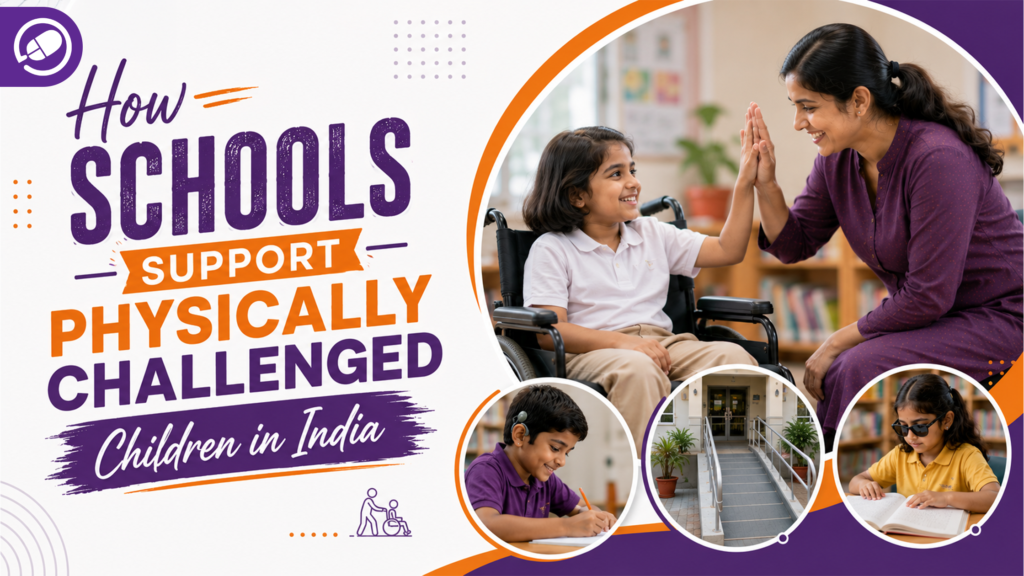
How Schools Support Physically Challenged Children in India

Are Traditional Schools Inclusive for Physically Disabled Students?

What Does “Physically Challenged” Actually Mean? “Physically challenged” describes a child whose mobility or physical function is limited by a condition such as a locomotor disability, cerebral palsy, or a lasting injury, and who needs some form of physical or structural accommodation to learn on equal footing with peers. It isn’t a single diagnosis it’s

Are Traditional Schools Inclusive for Physically Disabled Students? Read More »

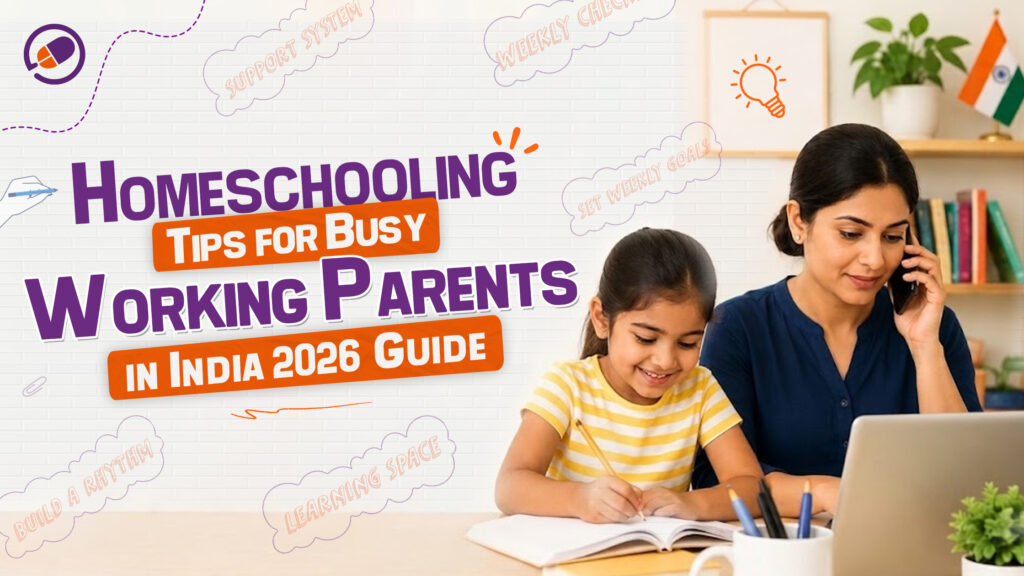
Homeschooling Tips for Busy Working Parents in India (2026 Guide)

Homeschooling Tips for Busy Working Parents in India (2026 Guide)

Quick Takeaways 2–4 focused hours at home covers more than a full classroom day because there’s no waiting, no repetition, and no 40-student pace Build a rhythm, not a rigid timetable. Flexibility is your biggest advantage over traditional school. NIOS makes Indian homeschooling board-exam ready. CBSE-curriculum platforms handle structured learning. Socialization is solvable it just

Homeschooling Tips for Busy Working Parents in India (2026 Guide) Read More »