

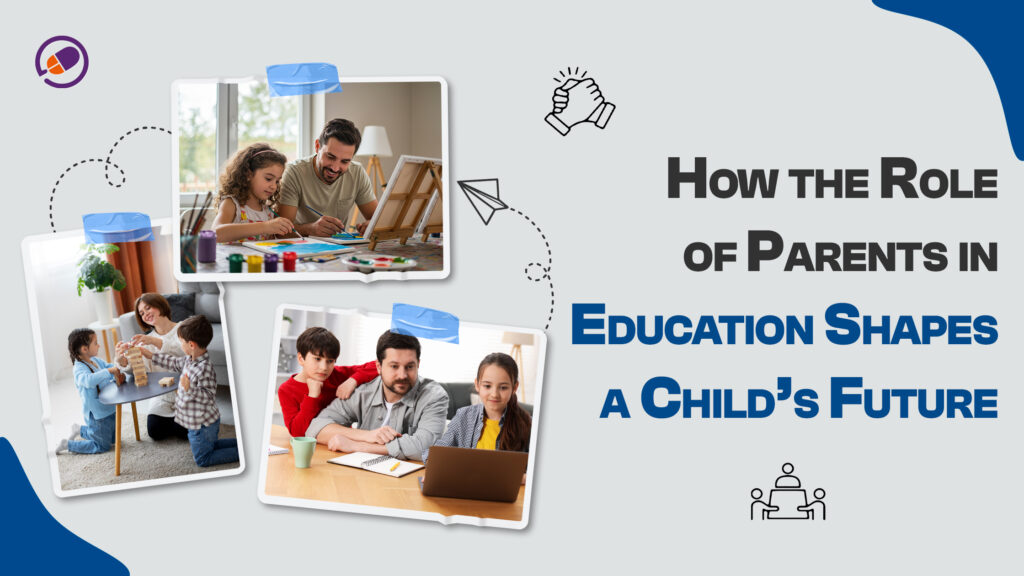
Schools provide the foundation, but a child’s most consistent learning support begins at home. Long before a teacher explains a concept or assigns homework, parents are already shaping how their children think, feel, and relate to learning. The role of parents in education is one of the most powerful and often underestimated influences in a child’s academic journey.
Yet parental involvement in education looks different at every stage of a child’s life, and getting it right is rarely straightforward. This blog explores why parental involvement matters, the outcomes it creates, and how that involvement should evolve with age.
It also addresses online learning, practical steps parents can take, common challenges families face, and how choosing the right school can better support parents in this deeply important role.
Why the Role of Parents in Education Is Important

When we talk about the role of parents in education, we are talking about something that goes far beyond homework help or school drop-offs. Parents are the first people who teach a child how to feel about learning itself.
The attitudes a child carries into a classroom, whether they believe they can figure things out, whether they persist when something feels hard, whether they take responsibility for their own progress, are shaped long before any teacher meets them. This is where parental involvement in education becomes truly foundational.
A strong school-home partnership begins with parents who model curiosity, consistency, and patience in everyday life. When a child grows up watching a parent approach challenges with effort rather than avoidance, they quietly absorb that same mindset. Learning habits are not built in classrooms alone. They are built at kitchen tables, during bedtime conversations, and in the small moments where a parent chooses encouragement over frustration.
Emotional security also plays a central role. A child who feels genuinely supported at home carries that confidence into every test, every group project, and every new challenge. And student motivation, something no school can manufacture alone, grows naturally in an environment where a child knows their efforts are noticed, and their struggles are understood.
Benefits of Parental Involvement in Education

The benefits of parental involvement in education are not just theoretical; they show up in real, measurable ways in a child’s everyday life. When parents actively engage in their child’s learning journey, the results speak for themselves.
Academic Performance and Learning Outcomes
Children whose parents are involved in their education consistently show stronger academic performance across all subjects. They score better on tests, submit assignments on time, and develop a deeper understanding of what they study rather than simply memorising to pass. Parental involvement in education also leads to improved learning outcomes over time. Children retain more, think more critically, and build skills that carry them well beyond the classroom. Studies also show that these children have better attendance records, simply because they feel more motivated and accountable to show up every day.
Confidence and Emotional Growth
When a child knows their parent is genuinely invested in their education, something shifts internally. Their child’s confidence grows not just academically, but in how they see themselves as capable, worthy individuals. They are more willing to raise their hand in class, attempt difficult problems, and bounce back from failure without falling apart. That quiet belief a parent plants at home blooms into self-assurance that follows the child everywhere.
The National Library of Medicine says that children thrive when parents and caregivers support their emotional well-being, build their confidence, and create a sense of love, security, and stability at home. Studies also suggest that strong parental support helps children cope better with stress, manage disappointment, regulate emotions, and reduce the risk of anxiety, depression, and other emotional challenges that can affect their performance at home, in school, and in everyday life.
Behaviour, Discipline, and Communication
Parental involvement in education directly influences how a child behaves both inside and outside school. Involved parents raise children with stronger social skills, better emotional regulation, and communication skills. These children are more respectful in classrooms, more cooperative with friends, and far better at expressing their thoughts and feelings without resorting to frustration or aggression.
Role of Parents in Early Childhood Education

The earliest years of a child’s life are the most powerful and the most fragile. Between the ages of 3 and 8, a child’s brain is developing at a pace it will never match again. This is precisely why the role of parents in early childhood education is not just important; it is everything.
Building Foundational Skills Before School Even Begins
Long before a child learns to read in a classroom, parents are already shaping their foundational skills at home. Simple daily habits, such as singing nursery rhymes, naming objects around the house, and counting steps on a staircase, quietly build the early learning blocks that formal education will later build upon.
The Power of Reading Aloud and Play
One of the most impactful things a parent can do during these early years is to read aloud every single day. Reading habits formed before the age of 8 tend to stay with a child for life, nurturing curiosity, imagination, and comprehension. Equally important is play-based learning, allowing children to explore, ask questions, make mistakes, and discover through play rather than pressure. Play is not a break from learning at this age. It is the learning.
Conversation Is the First Classroom
The role of parents in education during early childhood often happens in the most ordinary moments at the dinner table, during a car ride, or before bedtime. Talking with children, not just to them, builds vocabulary skills, strengthens listening skills, and teaches them that their thoughts and questions are always worth expressing.
Role of Parents in Inclusive Education

Inclusive education simply means that every child, regardless of their learning ability, physical condition, or background, has the right to learn alongside their peers in the same classroom. But inclusion does not happen only within school walls. The role of parents in inclusive education begins at home and extends to every conversation, decision, and interaction with their child’s school.
Partnering With Teachers and Support Staff
Parents of children with special learning needs are their child’s strongest advocates. Staying in close communication with teachers, attending review meetings, and collaborating with support staff ensures that the inclusive learning environment a school tries to build is actively reinforced at home. The role of parents in inclusive education in India is particularly significant, given the growing awareness around learning disabilities and the increasing number of schools adopting inclusive practices. Parents who stay informed and engaged make school collaboration far more effective.
Building Empathy and Acceptance at Home
Inclusion is as much about attitude as it is about access. Parents play a direct role in teaching their children to treat every classmate with respect, regardless of ability or difference. When empathy is modelled and discussed at home through everyday conversations, books, and real-life examples, children carry those values into the classroom, naturally contributing to a stronger culture of classroom inclusion.
Supporting Confidence and Participation
For children who face learning challenges, a parent’s encouragement at home directly shapes their willingness to participate in school. Celebrating small wins, reinforcing effort over outcome, and reminding a child that different does not mean less, these quiet acts of support build the kind of confidence that makes true inclusion possible.
The Role of Parents in Online Learning

The classroom has changed. Laptops have replaced blackboards, video calls have replaced face-to-face lessons, and children are now expected to learn in the same space where they play and unwind. In this new reality, the role of parents in online learning has become one of the most critical and most underestimated factors in a child’s academic success.
Creating the Right Environment for Learning
Online learning does not work without the right environment, and that environment starts at home. When parents create a dedicated, distraction-free study space, establish a consistent daily routine, and set clear boundaries around screen time, children are far more likely to stay focused and engaged. The role of parents in education does not pause when the school bell rings; in fact, if anything, it becomes even more hands-on.
Staying Involved Without Taking Over
Parental involvement in education, especially in a digital setting, means checking in regularly, asking what was covered in today’s lesson, and making sure their child actually understands the material rather than simply sitting in front of a screen. A parent who shows genuine interest in their child’s online learning sends a powerful message that their education matters, and so do you.
Building Discipline and Digital Responsibility
The role of parents in online learning extends beyond academics. It includes teaching children how to use technology responsibly, manage their time effectively, and stay committed even when no one is watching. How parents can support their child’s education in a digital world comes down to one simple truth: structure, attention, and presence at home are just as important as any online lesson.
6 Ways Parents Can Support Their Child’s Learning

Understanding how parents can support their child’s education does not require extra time or expertise; it requires consistency and intention.
Here are simple, actionable examples of parental involvement in education at home that any parent can begin today.
1.Create a Learning-Friendly Home Environment
Set up a quiet, organised, and well-lit study space free from distractions. A strong learning environment at home tells a child that focus and effort are valued.
2. Set Routines That Children Can Follow
Establish a fixed daily study routine, same time, same place. When studying becomes a habit rather than an obligation, children settle into it naturally.
3. Build Consistent Communication With Teachers
Regular parent-teacher communication keeps parents informed and prevents problems from going unnoticed. Do not wait for issues to arise before reaching out.
4. Encourage Reading, Questions, and Curiosity
Dedicate at least 20 minutes daily to reading time outside of schoolwork. Encouraging children to ask questions builds the kind of thinking no textbook can teach alone.
5. Stay Involved Without Adding Pressure
How parents can support their child’s learning at home often comes down to offering homework support, calmly being present without hovering, and encouraging without demanding perfection.
Challenges Parents Face in Education and How to Overcome Them

Parental involvement in education is not always straightforward. Between demanding jobs, household responsibilities, and the ever-growing complexity of modern schooling, many parents genuinely want to do more but do not always know how.
Here are the most common challenges and realistic ways to overcome them.
When Time Is Limited
Working parents often feel that busy schedules leave little room for meaningful involvement in their child’s education. The solution is not finding more hours; it is making better use of the ones already available. A ten-minute conversation during dinner, a quick check-in before bedtime, or simply asking “what was hard today?” can be more meaningful than an hour of forced study supervision. Consistency matters far more than quantity.
When Parents Are Unsure How to Help
Not every parent feels confident enough to help with schoolwork, especially as subjects become more advanced. Parents do not need to know every answer. They need to show interest, ask questions, and encourage their child to seek help from teachers when needed. Staying in regular contact with school staff bridges the gap between what happens in the classroom and what happens at home, removing communication barriers before they grow.
When Children Resist Structure or Support
Many children push back against routines, homework reminders, or parental involvement, especially teenagers. Rather than forcing compliance, parents can involve children in building their own study pressure management strategies. Letting a child choose their study time, set their own small goals, or decide how they want to be supported gives them a sense of ownership that naturally reduces resistance and builds lasting independence.
How Cyboard School Helps Parents Stay Involved in Their Child's Education
For many parents, online schooling raises a quiet but persistent worry: Is my child actually learning, or just sitting in front of a screen? This concern sits at the heart of what makes parental involvement in education so challenging in a digital world. Cyboard School was built with that exact parent in mind.
The most common frustration parents share about online education Without visibility into daily progress, it is nearly impossible to know whether a child is keeping up, falling behind, or simply going through the motions. Cyboard addresses this directly through Ai Powered Learning Management System that gives parents clear, real-time progress tracking and parent visibility into their child’s academic journey at every stage.
Cyboard’s curriculum is fully aligned with NEP 2020, ensuring that the learning design reflects the future India is building, one that values critical thinking skills, creativity, and conceptual understanding over rote learning. This gives parents the confidence that their child’s education is not just current, but genuinely future-ready.
The role of parents in education has always included nurturing the whole child, not just the student. Cyboard reflects this belief through its beyond-academics programme, which supports holistic development through activities, experiences, and opportunities that go well beyond textbooks and test scores. For parents who worry that online school support can feel cold or transactional, Cyboard offers something different: a learning environment where personalised learning and human growth go hand in hand.
Because parents who choose Cyboard are not just choosing a school, they are choosing a partner that understands education the way they do.
Wrapping Up
The role of parents in education was never meant to end at the school gate. Every conversation, every routine, every moment of genuine interest a parent shows in their child’s learning quietly builds the foundation for everything that follows academically, emotionally, and personally.
When parents and schools work together, children do not just perform better. They grow into more confident, curious, and resilient individuals who are truly prepared for the future.
If you are looking for a school that values your involvement as much as your child’s achievement, Cyboard School is built exactly for that. As one of the best online schools in India for parent involvement, Cyboard ensures that parents are never left on the outside of their child’s education.
Ready to take the next step?
Explore Cyboard School’s admission process today and give your child an education built on partnership, purpose, and potential.
Frequently Asked Questions
What is the role of parents in education?
Why is parental involvement in education important?
What are the benefits of parental involvement in education?
What is the role of parents in early childhood education?
What is the role of parents in inclusive education?
What is the role of parents in online learning?
How can parents support their child's education at home?
How does Cyboard Help Parents Stay Involved in Learning?
Explore More on Cyboard School