
Two students sat in the same classroom. Same school, same teachers, same grades on most report cards. But they didn’t end up doing equally well in their careers. Fast forward to ten years later, one of them was leading a team, making high-level ownership decisions, adapting to new roles, and comfortable speaking up and negotiating even when things didn’t go as per the plan.
On the other hand, the other student who looked equally well on paper, would freeze when it mattered most. In the big interview, at the pitch with everything on the line, and the make-or-break conversations. The difference between these two was just about something neither of them were separately taught in class: life skills.
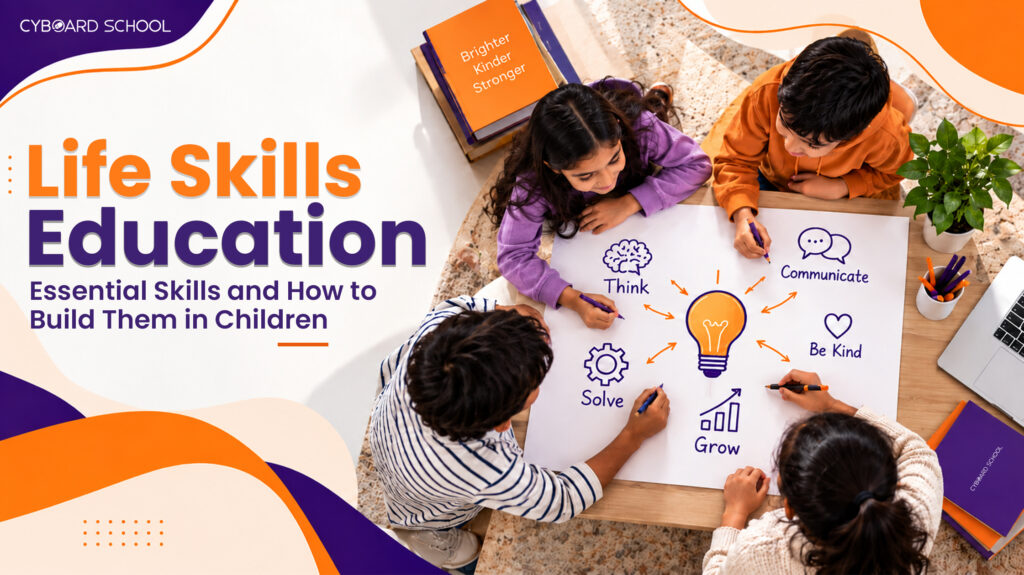
This guide covers 7 essential life skills that will help shape your child’s confidence and readiness for the real world. These skills will eventually become the X-Factor for your child’s holistic development and are worth teaching at home if their school isn’t explicitly covering them.
What is Life Skills Education?
Life skills education is the process of teaching children real-world abilities, like communication, decision making and problem solving alongside their academics. These skills help them handle everyday challenges and help them grow beyond just academic knowledge.
These are the exact same skills that differentiate the two students discussed earlier. The skills which can’t be taught in a 45 minutes lecture and which can be learnt easily alongside the regular academics.
Why Life Skills Education Matters for Your Child
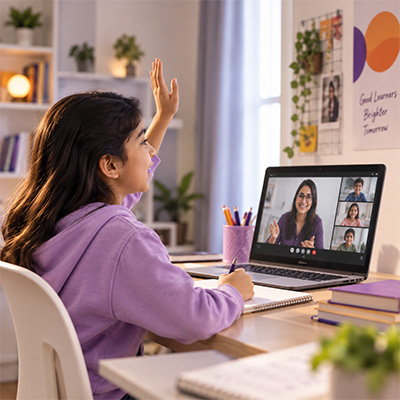
Academic scores tell you how well a child has understood the subject. They don’t tell how well that child can handle disagreement with peers, bounce back from low scores, or speak up in a group project instead of staying quiet.
That’s exactly the gap life skills education is meant to close. It’s not about replacing academics but to use what they’ve learnt in the best possible manner.
The need for life skills education becomes even clearer when we look at adolescent well-being. According to the World Health Organisation (WHO), 1 in every 7 adolescents aged 10-19 globally experiences a mental health condition. WHO also highlights problem solving, interpersonal skills, and learning to manage emotions as important aspects of development in adolescents.
What Are The Essential Life Skills Your Child Should Learn?
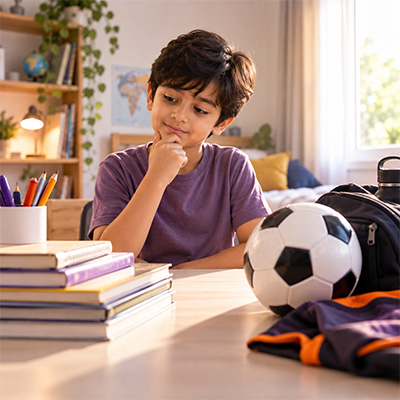
There isn’t any single fixed list. The set of life skills can vary depending upon a child’s age, personality and interests. However, there are certain core skills worth building early to ensure that they have the right foundation, regardless of where they end up in further stages of their career.
Below are the core life skills that every child should start building early on. For a broader look at the skills shaping this generation, refer to the guide on essential skills every student must learn.
Communication Skills
Communication is one of the most important life skills today, arguably more than ever. With AI and easy access to information, most people already know roughly the same things. What actually sets someone apart is the ability to express that knowledge clearly and to actually connect with people they’re talking to.
Communication Skills
Communication is one of the most important life skills today, arguably more than ever. With AI and easy access to information, most people already know roughly the same things. What actually sets someone apart is the ability to express that knowledge clearly and to actually connect with people they’re talking to.
Decision Making
Every day a child gets small chances to practice this skill when choosing between which homework to do first, which friend to play with, whether to speak up or stay quiet. Eventually these small and playful choices transform them into adults who can make the right decisions even when the stakes are high.
Emotional Regulation
Knowing how to handle low scores in exams matters as much as getting high scores. A child who can recognise disappointment and knows how to manage it when it turns into anger is far better equipped to handle setbacks later, whether in their college or at work.
Problem Solving
Children who face challenges early on and work through them by themselves get strong enough for any future obstacles. This mindset can only be built through solving real world problems. Textbooks or lectures alone can’t build this mindset in your kid. Encourage them to work through small daily challenges by themselves.
Time Management
Balancing school, coaching, and extracurricular activities is a skill in itself, the one most adults are still figuring out. Children who learn to plan their own time, rather than having fixed slots for each hour develop a sense of ownership that lasts with them beyond school as well.
Financial Literacy
Understanding the basics, realising the difference between a need and a want and spending wisely gives children the head start most adults wish they’d got earlier. It doesn’t need to be complicated, just simple pocket money management can teach them real and lasting lessons. Financial literacy in schools is one of the most overlooked yet important part of a child’s education.
Teamwork
Some students have the mindset that interacting and connecting with others will take them away from grades. The reality is that team work is the greatest advantage in today’s world. Learning to listen, compromise and contribute meaningfully within a group is a skill that shows up in almost every part of their life, from college projects to the workplace.
There are a lot of simple activities you can plan for your child so that they get to practice life skills naturally at home.
| Life Skill | What It Builds | Activity |
|---|---|---|
| Communication | Confidence and Connection | Ask them to explain their favourite chapters at home. |
| Decision Making | Independence and Clarity | Let them choose between different outfits. |
| Emotional Regulation | Resilience and Self-Awareness | Encourage them to name their feelings out loud. |
| Problem Solving | Analytical Thinking and Creativity | Let them try fixing a small issue by themselves before stepping in. |
| Time Management | Ownership and Self-Discipline | Use a flexible timer for homework and leisure time. |
| Financial Literacy | Maturity and Responsibility | Give them ₹100 and let them decide how to spend and save that amount. |
| Teamwork | Collaboration and Empathy | Play cooperative games with them, such as solving a jigsaw puzzle together. |
Life Skills By Age: Which Skill to Focus on at Each Stage?
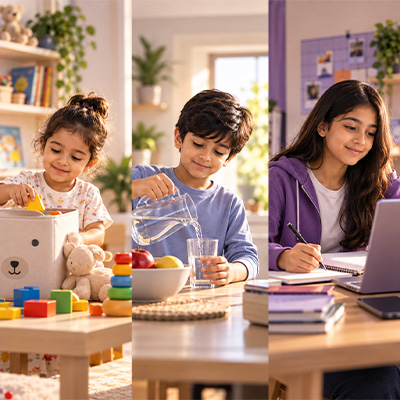
Every skill doesn’t need equal attention for all age groups. Focusing on all life skills at once isn’t usually a great plan. Choosing the right one at the right stage makes learning life skills faster and less forced.
Age 3 to 6: Foundational Skills
At this stage, the target should be to give your child the exposure, not mastery.
Emotional Regulation: Naming feelings out loud builds the vocabulary for managing emotions later.
Communication: Encouraging them to describe their day or explain a story makes children expressive.
Age 7 to 12: Practice and Independence
Children don’t require adult intervention every time at this stage. Let them handle minor setbacks and make small decisions on their own.
Time Management: Introduce basic routines like homework and playtime schedule instead of overwhelming kids with a strict time table.
Problem Solving: Ask them to get through a stuck homework question or a math puzzle and reward them after they’ve solved it.
Age 13 and Above: Application and Ownership
The teenagers are now just a step away before they get hands-on ownership and are put to real world tests. So the skills at this step need to be application-oriented.
Financial Literacy: Managing a monthly allowance or saving for something they’ve been wishing for builds ownership and real financial instincts.
Teamwork: Group projects or leadership roles in clubs test how well they can contribute in a team environment.
How Parents Can Build Life Skills at Home?
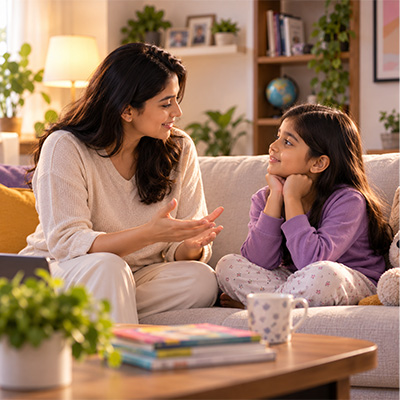
Although children spend a good chunk of their time and energy in schools, it might be possible that the curriculum does not align well enough with life skills education. In that case, the role parents play in a child’s education grows from just academics to beyond in how they handle everything else as well.
The good news is that a lot of life skills are actually built in small, everyday moments at home where there isn’t a planned lesson or a special activity.
Letting children make small decisions on their own like how to spend their pocket money or which hobby to pursue gives real practice at decision making which would otherwise just have been a weekly value education theory lesson. Involving them in simple age-appropriate conversations as simple as planning a family trip or splitting a small budget gives them a natural maturity for financial thinking and real-world problem solving.
How Cyboard School Approaches Life Skills Education
Online schools are assumed to be academics-heavy just because of the format, but this isn’t necessarily true. At Cyboard School, we make sure to engage students with various extracurricular activities like group projects, interactive workshops, virtual clubs, and storytelling sessions to ensure continuous interaction with peers and teachers.
Students are given a structured space for things that don’t just show up on report cards, rather last with them beyond schools as well. This is exactly what education beyond academics aims at. If you’d like to see how this shows up for your child, explore Cyboard School’s curriculum today.
Conclusion
Life skills aren’t a replacement for academics. They aim at making academics actually useful once a child steps outside the classroom. Communication, decision-making, emotional regulation, problem-solving, time management, financial literacy and teamwork are the skills that quietly decide how a child handles pressure situations.
Schools are the place where children spend a majority of their time and energy. There can’t be a better environment than schools to practise these skills alongside peers. That said, the role of schools works best when it is paired with what happens at home.
The good news is that parents don’t need a structured plan for this. Start with any one skill discussed here, look into everyday moments for real chances and let the rest follow gradually.
Frequently Asked Questions
Where can life skills be taught better, home or school?
At what age should life skills education start?
Do life skills affect academic performance too?
How can I tell if my child is developing life skills?
What is the role of schools in life skills for students?
What does WHO recommend for developing life skills in students?
Explore More on Cyboard School
Recommended Blogs to Read
https://cyboardschool.com/the-importance-of-healthy-peer-relationships-in-your-childs-life/
https://cyboardschool.com/importance-of-public-speaking-skills-for-todays-students/
https://cyboardschool.com/6-simple-ways-to-strengthen-parent-child-relationship/
https://cyboardschool.com/balance-online-schooling-with-sports/