Cyboard School

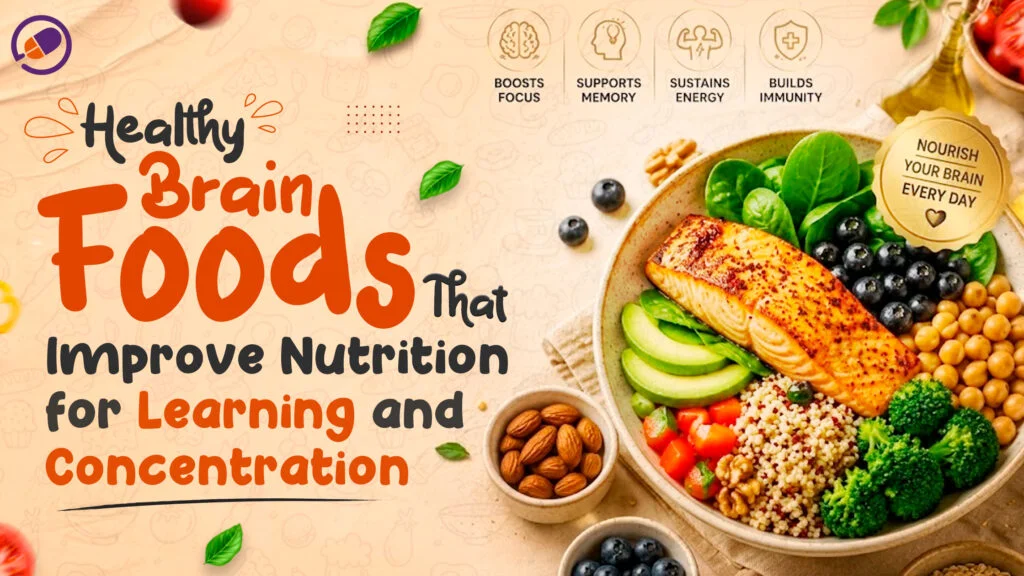
Healthy Brain Foods That Improve Nutrition for Learning and Concentration

Healthy Brain Foods That Improve Nutrition for Learning and Concentration

Do you ever find yourself cutting in the middle of a conversation, only to realise you weren’t listening? Or taken a quick break from work, only to return and completely forget what you were doing? In the fast-paced world of today, our brains are switching tasks, notifications and distractions all the time. This mental overload can affect memory, concentration and focus over time without us even realising it. In other words, nutrition for learning is important in keeping the brain sharp, active and ready to perform better every day.

In this guide, we’ve covered the best brain foods that can help to improve memory, boost concentration and support overall brain health naturally. 

Why Does Food Affect How Kids Learn?

Child studying with healthy brain food that supports nutrition for learning and concentration

But before we get into the list of foods, let’s take a few seconds to understand why this matters. The brain is a very greedy organ. It accounts for only 2% of a child’s body weight, yet uses about 20% of their daily energy. From paying attention in class to remembering little things each day, your brain needs the right fuel to keep it working all day long.

A well-fed brain works better when it receives the right nutrients from balanced and healthy foods. These nutrients support focus and attention, mood, the growth and repair of brain cells, which are important for learning and daily mental performance, and they keep energy levels steady throughout the school day.

When does the fuel come from highly processed foods full of sugar and additives? You tend to get the opposite energy crashes, brain fog and irritability around the 2nd or 3rd period.

Nutrition is not a fad to learn. Elementary biology. And once you see the connection, you can’t unsee it. That is precisely why one of the best things you can do for your child’s academic life is to pay attention to what goes on their plate. 

8 Brain-Boosting Foods for Kids to Improve Focus and Learning

While exercise, meditation, journaling, and yoga for kids can help improve focus and emotional balance, they are only one part of the bigger picture. The brain also needs proper nutrition every single day to stay active, sharp, and healthy. Nutritious brain foods play an equally important role in supporting memory, concentration, learning, and overall mental well-being.

Here are 8 healthy foods that can help improve focus, support memory, and keep the brain active and alert throughout the day.

1. Eggs

If there’s one breakfast food worth making time for, it’s eggs. They’re packed with choline, a nutrient that supports the production of acetylcholine, a brain chemical that plays a key role in memory and learning.

A quick scrambled or hard-boiled egg can be prepared in just 10 to 15 minutes.  You can even prep boiled eggs the night before. Pair them with some whole-grain toast, and your child is heading out the door with a genuinely strong start.

According to the National Library of Medicine, choline is an essential nutrient for brain development, and it suggests that higher choline intake during pregnancy may help support better memory, learning, and cognitive function in children.

2. Fatty Fish

Fish such as salmon, sardines, mackerel and even canned tuna can be great additions to your child’s diet to aid in healthy brain development and focus. They’re packed with omega-3s, especially DHA (Docosahexaenoic Acid), which is literally a building block of the brain. The brain is about 60% fat, much of it DHA.

Children with low omega-3 levels have been associated with attention problems, poor memory and even low mood. Adding fatty fish 2 to 3 times a week is one of the most well-supported nutrients for learning, and it’s easier to pull off than most parents expect. 

Not a fan of fish in your house? Great ways to sneak it in without a battle are tinned salmon in pasta, fish tacos or fish fingers made with real salmon. 

3. Blueberries

If you want the best fruit for brain development, blueberries are really hard to beat. They are rich in antioxidants called flavonoids, which have been shown to improve blood flow to the brain and communication between brain cells.

Blueberries are simple to serve fresh, frozen or blended into a smoothie, and they are versatile. Frozen blueberries can provide the same nutrition as fresh blueberries and are often a cheaper option for families.

Just sprinkle a handful into yogurt, porridge or a breakfast smoothie, and you’re done. 

Other fruits that support brain development include:

  • Avocados– packed with healthy fats that help support better blood flow and overall brain function.
  • Bananas – a good source of B6, which helps produce serotonin and norepinephrine
  • Oranges – packed with vitamin C, which protects brain cells from oxidative stress

4. Nuts and Seeds

A small handful of walnuts, almonds, or pumpkin seeds makes one of the best healthy snacks for kids, and it genuinely supports brain function. Walnuts in particular are shaped like a tiny brain (coincidence? Maybe not) and are one of the richest plant-based sources of omega-3s. Pumpkin seeds are high in zinc, which plays a role in memory and thinking skills.

For younger children, serve nut butters spread on whole-grain crackers or apple slices. For older kids, a small mixed nut pack in the lunchbox works well. 

5. Whole Grains

Here’s something worth knowing about how children’s brains run, they depend almost entirely on glucose (sugar from carbohydrates) for energy. The catch is that how that sugar is delivered matters enormously.

Refined carbohydrates, such as white bread, sugary cereals, and processed snacks, flood the bloodstream with sugar quickly, causing a spike followed by a crash. Whole grains do the opposite. Oats, wholegrain bread, brown rice, and quinoa release glucose slowly and steadily, giving the brain consistent fuel across a few hours rather than a sharp peak and dip.

Swapping white bread for wholegrain, or making porridge instead of sugary cereal, is one of the simplest changes with the biggest payoff for a healthy diet for teenagers and younger kids alike. When it comes to nutrition for learning, stable blood sugar is the foundation on which everything else is built.

6. Leafy Greens

Spinach, kale, broccoli, and peas, we know that no kids like to eat them. Not only kids sometimes, even adults, hesitate to eat, but they’re also genuinely exceptional for brain health. These vegetables are rich in folate, vitamin K, lutein, and beta-carotene. nutrients that have been linked to slower cognitive decline in adults, and better cognitive development in children.

Getting greens into a reluctant child doesn’t have to be a standoff at the dinner table. A handful of spinach blended into a fruit smoothie is virtually undetectable. Broccoli in a cheesy pasta, peas stirred through rice, small additions add up over time.

7. Dark Chocolate

Spinach, kale, broccoli, and peas, we know that no kids like to eat them. Not only kids sometimes, even adults, hesitate to eat, but they’re also genuinely exceptional for brain health. These vegetables are rich in folate, vitamin K, lutein, and beta-carotene. nutrients that have been linked to slower cognitive decline in adults, and better cognitive development in children.

Getting greens into a reluctant child doesn’t have to be a standoff at the dinner table. A handful of spinach blended into a fruit smoothie is virtually undetectable. Broccoli in a cheesy pasta, peas stirred through rice, small additions add up over time.

8. Yogurt

The connection between the gut and brain plays an important role in your child’s focus, mood, and overall nutrition for learning. When gut health is good, children often feel more active, balanced, and ready to learn.

Plain Greek yoghurt is one of the most practical healthy snacks for kids. It is packed with protein for steady energy, calcium for strong bones, B vitamins, and probiotics that support gut health and brain function. Kids can enjoy it on its own, with fruits, or blended into a smoothie. Choose plain yoghurt over flavoured options to avoid extra sugar, and add a little honey if needed.

While these brain-boosting foods and nutrition for learning are important, healthy eating habits can become even more fun when kids get involved in the kitchen. You can also try simple fireless healthy cooking recipes for kids using fresh fruits, nuts, yogurt, oats, and other homemade ingredients. It is a great way to encourage better eating habits while helping children learn creativity, independence, and smart food choices at an early age.

Healthy Snack Ideas for Busy School Days

Healthy school snacks for kids that support focus and brain development

Knowing what’s good for the brain is one thing. Turning that into actual food in an actual lunchbox is another. The snacks below are built around nutrition for learning, quick to prepare, genuinely brain-friendly, and most importantly, things kids will actually eat.

  • Apple slices + almond butter –  fibre, healthy fat, and slow-release energy
  • Hard-boiled egg + wholegrain crackers –  protein and complex carbs
  • Greek yoghurt + frozen blueberries –  probiotics and antioxidants
  • Walnuts + a small square of dark chocolate – omega-3s and flavonoids
  • Hummus + sliced cucumber and carrots – plant protein and hydration
  • Banana + peanut butter –  B6, potassium, and healthy fat
  • Oat-based energy balls (rolled oats, honey, nut butter, dark chocolate chips) make a batch on Sunday and store in the fridge all week

The goal is not to have all the mentioned fruits and snacks in your fridge all the time, but to keep a few healthier options available so your child naturally reaches for better choices between meals.

Foods That Can Affect Your Child’s Focus and Learning

Just as certain foods support the brain, others work against it. You don’t need to ban anything completely that usually backfires, but being mindful of these is worth it.

  1. Sugary drinks and juices: Even “natural” fruit juices deliver a concentrated hit of sugar without fibre. Water and milk are far better choices for school days.

  2. Ultra-processed snacks: Crisps, biscuits, packaged cakes, these are typically high in refined carbohydrates, trans fats, and artificial additives. Some food colourings (like Red 40 and Yellow 5) have been linked to increased hyperactivity in sensitive children.

  3. Energy drinks: These have no place in a child’s or teenager’s diet. They’re loaded with caffeine and sugar, and their impact on the developing brain is genuinely worrying. Yet surveys show a significant number of teenagers consume them regularly.

  4. Skipping breakfast entirely: Consistently skipping breakfast is one of the most studied factors linked to poor concentration, lower test scores, and increased fatigue in school-age children. Even a small, nutritious breakfast makes a difference.

Quick Tips for Busy Parents

Parent preparing healthy brain foods and snacks for children before school

You are not a nutritionist or a chef. You are a parent simply trying to give your child the very best, whether it is good education, healthy food, better opportunities, or a brighter future. No parent can know everything, and no one expects you to take professional advice for every small decision. But when it comes to your child’s growth, learning, and overall health, understanding the impact of daily habits and nutrition becomes important. Keeping that in mind, here are a few practical tips that can genuinely help support your child’s brain health, focus, and development.

  • Prep on Sunday.
    Boil a batch of eggs, make some energy balls, wash and portion fruit and veg. Having ready-to-grab options removes the decision fatigue during the week.
  • Upgrade what you already buy.
    Swap white bread for wholegrain. Swap flavoured yogurt for plain. Swap juice for water with a slice of lemon. These aren’t dramatic changes, they’re easy swaps.
  • Make smoothies work for you.
    A morning smoothie with spinach, frozen blueberries, banana, Greek yogurt, and a tablespoon of nut butter covers an impressive number of brain-boosting nutrients in one go, and most kids drink it happily without knowing what’s in it.
  • Eat together when you can.
    Research consistently shows that children who eat meals with family tend to have better diets overall. It also models good eating habits without lectures.
  • Don’t make food a battle.
    If your child won’t touch salmon, try tinned tuna. If they won’t eat walnuts, try peanut butter. The goal is progress, not perfection. Keep offering, keep it low pressure, and let them have some say in what they eat.

The After-School Slump

Healthy after-school snacks that help improve kids' energy and concentration

Many parents notice a pattern that their child comes home from school tired, irritable, and reaching straight for crisps or biscuits. This is the classic after-school energy crash, and it’s usually a sign that nutrition for learning broke down somewhere in the afternoon.

If your child’s lunchbox comes home half-eaten, or if they had a canteen lunch heavy on refined carbs and light on protein, their blood sugar has likely crashed by 3 pm. The fix isn’t willpower, it’s preparation.

Having a proper after-school snack ready (a banana and nut butter, yogurt with berries, some cheese and crackers) can turn a grumpy, unfocused child into a much calmer one within 20 minutes. Proper fuel restores blood sugar, and the mood and focus tend to follow.

Bringing It All Together

Nutrition for learning doesn’t have to mean complicated meal plans or expensive superfoods. The most powerful brain foods are often the most straightforward, eggs, oily fish, blueberries, nuts, whole grains, and leafy greens. Foods that have been around for thousands of years, eaten by people around the world, and increasingly supported by modern neuroscience.

The shift is less about individual superfoods and more about the overall pattern. A child who regularly eats a variety of whole foods, stays hydrated, eats breakfast, and limits ultra-processed snacks is going to be in a much better position to focus, learn, and thrive not just on exam days, but every day.

You do not need to change your child’s entire diet overnight. Replace one unhealthy snack this week, introduce one new brain-healthy food, or prepare something simple during the weekend that makes busy weekdays easier. These small efforts create long-term habits faster than most parents realise.

Also, avoid serving the same meals every single day. Children get bored easily, and healthy eating should never feel like a punishment. Keep experimenting with foods that are both nutritious and tasty. Add colour, try fun shapes, use cute plates, or create playful food designs that make your child curious and excited to eat. Sometimes, the presentation matters just as much as the food itself. When healthy meals feel fun and comforting, children naturally become more open to trying new things.

Your child’s brain is doing extraordinary things every single day. Give it the fuel it deserves.

FAQs

Q1. My child won't eat fish. How can I still get omega-3s into their diet?

Plant-based omega-3 sources include walnuts, chia seeds, flaxseeds, and hemp seeds. You can stir ground flaxseed into porridge or smoothies without them noticing. However, plant-based omega-3s (ALA) aren't as readily converted by the body as the DHA and EPA found in fish, so an algae-based omega-3 supplement (which is where fish get their omega-3s from in the first place) is worth discussing with your GP.

Q2. Are brain-boosting foods different for teenagers compared to younger kids?

The core nutrients are the same omega-3s, iron, B vitamins, zinc, and antioxidants, but teenagers need more of everything because they're going through rapid physical and cognitive growth. Nutrition for learning at this stage should also pay particular attention to iron (especially for teenage girls) and B12, as deficiencies in both are common and can significantly affect energy and concentration.

Q4. How quickly will I notice a difference once I change my child's diet?

It varies, but many parents report noticing improvements in mood and energy within 2 to 4 weeks of consistent changes. Significant improvements in focus and memory may take longer than months rather than weeks. Consistency matters far more than perfection.

Q5. Is it worth giving my child a multivitamin as well?

A good, varied diet should cover most nutritional needs, but it's not always easy to achieve consistently, especially with picky eaters. A children's multivitamin can fill gaps, but it shouldn't replace real food. If you're concerned about deficiencies (particularly vitamin D, iron, or omega-3s), it's worth speaking to your child's doctor for a targeted approach.

Q6. Are there specific foods that help with exam stress?

Yes. Foods rich in magnesium (dark chocolate, leafy greens, nuts, and seeds) help regulate the stress response. B vitamins (found in eggs, whole grains, and dairy) support the nervous system. Ensuring adequate hydration, even mild dehydration, impairs cognitive function, is often overlooked. A glass of water alongside every meal or snack is a simple, effective habit.

Explore More on Cyboard School

Leave a Comment

Your email address will not be published. Required fields are marked *

This site uses Akismet to reduce spam. Learn how your comment data is processed.
